
User:RA2lover/Sandbox/State Change Mechanics
More actions
Phase Change Data Table
| Gas | A Coefficient | B Coefficient |
|---|---|---|
|
2.6854996004e-11 | 6.49214937325 |

|
5.5757107833e-07 | 4.40221368946 |
|
1.579573e-26 | 12.195837931 |
|
5.863496734e-15 | 7.8643601035 |

|
2.079033884 | 1.31202194555 |
|
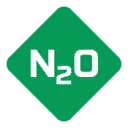
3.8782059839e-19 | 7.90030107708 |
|
0.065353501531 | 1.70297431874 |

|
3.18041e-05 | 4.4843872973 |

|
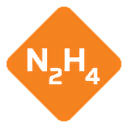
4e-20 | 8.2702571126082 |
|
8e-22 | 9.1564280804534 |

|
9e-20 | 8.391884446079 |

|
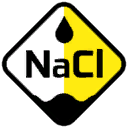
0 | 0 |
|
6.211737044295e-08 | 2.8774143233483 |

|
0.48388429552358 | 1.4041336082045 |

|
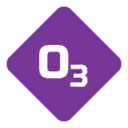
1e-21 | 9.1088444607899 |
|
0.22905767012829 | 1.7787987515586 |
Solids
Are Processed in a Furnace if its internal temperature exceeds their flash point.
Ingots
Removes 45 J/flashpoint temperature/g of energy and is converted to a reagent on processing.
Ores/Reagent Mixes
Releases contents on processing.
Ices
TBW
Pure Ices
TBW
Things
TBW
Gases
Condensation
If gas is below minimum condensation pressure (1800 kPa for Pollutant, 800 kPa for Nitrous Oxide, 517 kPa for Carbon Dioxide, 6.3 kPa for everything else), no condensation occurs, regardless of temperature.
Otherwise, calculate condensation temperature for the current pressure. If the current temperature is above the current temperature, no condensation occurs.
If it is below, calculate an energy limit for condensation (the energy required to bring the gas under condensation down to the condensation temperature for its current pressure).
This limit is then further reduced by a condensation ratio, which is fixed at 10% if there's enough energy to condense at least 0.1 moles, or 50% if less, to calculate the number of moles condensed per tick.
Condensation Example
A 50x stack of Nitrice is dropped into an empty 790 L Portable Gas Tank and is somehow instantly processed instead of being processed at 1x/tick.
The resulting gas mix is 1125 moles of nitrogen and 125 moles of nitrous oxide(as gas), both at 5°C (278.15 K).
The resulting pressure is 3659.284 kPa. The condensation temperature for the given pressure is the maximum liquid temperature for Nitrous Oxide, 430.6 K.
Heating the 125 moles of nitrous oxide to that temperature results in an energy limit of 708.8925 kJ.
This is more than the 500 kJ required to condense all of the nitrous oxide present, so the 500 kJ limit is used instead.
Because the quantities are far in excess of 0.1 mol, only 10% of the limit is used, resulting in 50kJ of condensation on this tick (12.5 moles).
The gas mix's energy before the tick was 7739.52375 kJ. Adding 50kJ raises its temperature to 279.946 K (although the condensation is still incomplete).
Liquids
World Liquid Density
A world liquid has the same density as 8000 L of an ideal gas at the liquid's saturation pressure at maximum temperature would have if compressed to 7990 L.
These are how many moles of liquid a 8000L world cell can hold:
 Liquid Oxygen 35636.86 mols
 Liquid Nitrogen 30422.6 mols
 Liquid Carbon Dioxide 21812.45 mols
 Liquid Volatiles 29642.56 mols
 Liquid Pollutant 13600.7 mols
 Water 8989.58 mols
 Polluted Water 9189.66 mols
 Hydrogen 82575.7 mols
 Nitrous Oxide 4474.61 mols
Evaporation
Calculate evaporation energy limits, quantity limits, and an evaporation ratio, which depend on the circumstances the liquid is in.
If the quantity of liquids evaporated by the evaporation energy limit exceeds the evaporation quantity limit, the evaporation quantity limit is used instead.
Either of the limits(energy or quantity) is then further reduced by an evaporation ratio, which is fixed at 10% if there are more than 0.1 moles of liquids, or 50% if less.
Subcooled / Compressed liquids
If the pressure of the liquid is greater than the evaporation pressure for its temperature, no evaporation occurs.
Evaporating liquids
Liquids evaporating under normal circumstances have an evaporation energy limit, proportional to how far below the evaporation pressure the liquid is. The maximum value under normal circumstances is the energy required to cool the liquid by 10°C in a tick. This is achieved with a pressure delta equal to the liquid's minimum liquid pressure, and linearly decreases to 0°C on smaller pressure deltas.
They also have a evaporation quantity limit. Under normal evaporation, that equates to the amount of ideal gas required to increase the network/cell's pressure to the evaporation pressure. If this quantity is greater than the amount of liquid available, the latter is used instead.
Superheated liquids
If the temperature of the liquid is above its maximum liquid temperature, liquid evaporation is accelerated. The evaporation quantity limit is replaced with the total amount of liquid, and the evaporation energy limit is increased to the energy required to cool the liquid down to its maximum liquid temperature if that is greater than the existing evaporation energy limit.
Supercooled liquids
Liquids below 1 K above their freezing temperature inside a network evaporate at a slower rate, with their evaporation energy reduced to quantity*specific heat W. This limits their maximum cooling rate to 1°C/s. Liquids below their freezing temperature have their evaporation pressure linearly reduced to the Armstrong pressure (6.3 kPa) at half their freezing point. As most liquids are at armstrong pressure at their freezing point, this only affects Liquid Carbon Dioxide, Liquid Nitrous Oxide, Liquid Silanol, Liquid Ozone and Liquid Pollutant.
"Hypercooled" liquids"
Liquids below half their freezing temperature don't evaporate regardless of conditions. "Hypercooled" liquids can exist indefinitely in world cells not belonging to a room as long as the quantity in the cell remains below the ice formation threshold and they don't get heated back to a supercooled state.
In real life, hypercooled liquids refer to supercooled liquids where the temperature has dropped to below the point where the resulting solid would be below its freezing point despite the latent heat.
Evaporation Example
A 7500 L room cell containing 50 kPa of water vapor and 1000 L (1123.6975 moles) of liquid water at 100°C undergoes evaporation for 1 tick.
The water's evaporation pressure at this temperature is 101.325 kPa, giving us an evaporation pressure gradient of 51.325 kPa.
The water's minimum liquid pressure is 6.3 kPa, which the evaporation pressure gradient is well in excess of, making the evaporation energy limit 72 J/mol*K * 10°C * 1123.6975 mol = 809.062 kJ. This energy would be enough to evaporate 101.132775 moles of water.
The water's evaporation quantity limit is 6500 L of ideal gas at 51.325 kPa and 100°C, or 107.5288 mol. This limit could be increased further by removing water vapor faster to achieve a lower pressure, but because our available energy is not enough to hit the evaporation quantity limit, the available energy is completely used instead.
Because the quantities are far in excess of 0.1 mol, only 10% of those 101.132775 moles of water is evaporated, resulting in 80.9062 kJ/tick of cooling.
Evaporation Example 2
A nitrogen gas buffer tank is used as a cold storage for later cryogenic fuel processing and is currently being cooled to -75°C (198.15 K) by a single, 200 L Evaporation Chamber loaded with Liquid Pollutant. Calculate its maximum cooling capacity at that temperature.
Under perfect conditions, the evaporation chamber would maintain a perfect vacuum and 20L of liquid pollutant. We can test those assumptions by checking if it can maintain those conditions under those circumstances.
The evaporation pressure for pollutant at -75°C is 2140.9 kPa, above the minimum pressure of 1200 kPa, giving an evaporation energy limit of 24.8 J/mol*K * 10°C * 500 mols = 124 kJ. This energy would be enough to evaporate 62 moles of pollutant.
The evaporation quantity limit is 180L of ideal gas at 2140.9 kPa and -75°C, or 233.9 mols, above the 62 mol figure, which is used instead.
Only 10% of the 62 moles are evaporated in a tick, meaning 6.2 moles are evaporated for 12.4 kJ of cooling.
The evaporation chamber's built-in purge valve can remove gases at 1500 kPa*10L, or 9.10464 moles/tick at -75°C.
The evaporation chamber's built-in liquid regulator can replenish liquids at 0.25 L/tick, or 6.25 mols/tick, giving very little room for scaling further(assuming the target liquid level could be modified to optimize evaporation rate).
The good news is the chamber's cooling rate remains constant down to -98°C (resulting in constant cooling until the purge valve starts to struggle at approximately 20°C if unassisted), but the design needs to be scaled up should more cooling be needed.
Evaporation Example 3:
For identical expansion volumes, what is the temperature at which evaporating liquid nitrogen is better than evaporating liquid oxygen?
We want to find a temperature where the additional evaporation quantity limit provided by liquid nitrogen's higher vapor pressure beats its lower latent heat.
Liquid Oxygen has a latent heat of 800 J/mol while liquid nitrogen only has 500 J/mol. Liquid nitrogen needs to expand 1.6 times more moles of gas to achieve the same cooling capacity.
We can plot the vapor pressures for both gases based on their temperature and find the intersection point:
-200°C: 32.3 kPa oxygen, Nitrogen would need 51.68 kPa to break even but achieves 86.7 kPa making it better.
-190°C: 150 kPa nitrogen. Oxygen needs 93.75 kPa to break even but achieves 72.6 kPa making it worse.
-185°C: 110.6 kPa oxygen. Nitrogen needs 176 kPa to break even but achieves 199.5 kPa making it better.
-175°C: 315.7 kPa nitrogen. Oxygen needs 196.875 kPa and achieves 217.5 kPa making it better.
-179°C: 164.2 kPa oxygen. Nitrogen needs 262.72 kPa to break even but achieves 260.9 kPa making it worse.
-181°C: 244.3 kPa nitrogen. Oxygen needs 152.6875 kPa to break even but achieves 149 kPa making it worse.
Evaporation Example 4
What is the band where evaporating water in an evaporation chamber beats silanol?
The evaporation chamber has a liquid pumping capacity of 0.25 L/tick and a gas extraction capacity of 1500 kPa*L.
Water evaporates at 8 kJ/mol but can be stored in 0.018 L/mol.
Silanol evaporates at 10 kJ/mol but needs 0.16 L/mol, hard-capping cooling to 15625 J/tick or 1.5625 mol/tick. Water achieves 444.(4) kJ/L (which would let it achieve a theoretical 111.(1) kJ/tick or 13.(8) mol/tick) but is limited by extraction capacity and vapor pressure.
At water's critical temperature (371°C), the exhaust pump can extract 2.8 mol/tick, providing 22.4 kJ of cooling vs the constant 15.625 kJ of silanol.
The exhaust capacity increases as the exhaust gets colder: at 229°C, this results in a maximum of 3.6 mol/tick(28.8 kJ) before extraction is limited by evaporation rate.
We want to find the vapor pressure where evaporation rate is limited to 15.625 kJ/mol.
This is 1.953125 mol/tick, or ~186°C.
Liquid nitrous oxide also beats silanol because of its higher liquid flow rate while maintaining enough vapor pressure. At its freezing temperature, enough vapor pressure remains to evaporate 6.8 mol/tick (27.2 kJ), there's some room for extraction rate at 7.15 mol/tick and liquid pumping rate has room to spare at 9.625 mol/tick.
Evaporation Example 5
Gas pipes can only withstand 2% of their volume being liquid. What is the best gas for that application?
This limits our evaporation to 0.2% of the available liquid volume per tick without causing pipe damage. Each 1000 L of chamber space affords 2 L of liquid evaporated per tick, which results in the following load on the system:
| Liquid | Mols/L evaporated | Evaporation kJ | Equilibrium temperature |
|---|---|---|---|
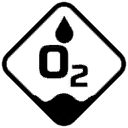
|
66.(6) | 53.(3) | 76 K |
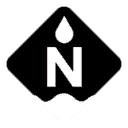
|
57.4712643678 | 28.7356321839 | 58 K |
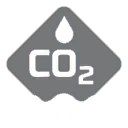
|
50 | 30 | Below Freezing |
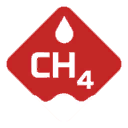
|
50 | 50 | 105 K |
|
50 | 100 | Below Freezing |
|
111.111111111 | 888.888888888 | 463 K (Water) |
|
76.9230769231 | 307.692307692 | Below Freezing |
|
71.4285714286 | 14.2857142857 | 18 K |
|
66.(6) | 266.(6) | 361 K |
|
|
34.4827586207 | 68.9655172414 | 319 K |
|
|
50 | 800 | Above Critical Temperature |

|
12.5 | 125 | Below Freezing |

|
71.4285714286 | 71.4285714286 | 366 K |
|
76.9230769231 | 76.9230769231 | Below Freezing |
Below the equilibrium temperature(and assuming the tank's extraction system can maintain a perfect vacuum), the 1000 L tank is limited by expansion volume instead of available liquid. For these scenarios, a liquid volume level above 2% is needed, requiring an evaporation chamber not made out of gas pipes.
Evaporation Example 6
What's the ideal liquid level for an in-world evaporation chamber in order to maximize cooling rate?
The goal is to maximize the evaporation energy limit, while not exceeding the evaporation quantity limit. Increasing the evaporation energy limit requires more liquid, but reduces the amount of space available for evaporation.
A simple IC10 implementation can explore the space until an optimal liquid level is reached:
#CalcEvaporationMoles:
sub EvaporationVolume Volume VolumeOfLiquid #A Pipe analyzer can get both. A gas sensor can't get Volume, hardcode it instead.

#Calculate evaporation pressure at temperature
# = A*pow(Temp, B). A and B coefficients are specific to each gas and define its evaporation pressure curve.
pow temp Temperature Bgas
mul EvaporationPressure Agas temp
clamp EvaporationPressure EvaporationPressure MinLiquidPressure MaxTemperatureLiquidPressure #gas-specific, but usually 6.3 and 6000 kPa.

sub AvailableEvaporationPressure EvaporationPressure Pressure

#Calculate the evaporation quantity limit through PV = nRT -> n = PV/RT
mul EvaporationQuantityLimit AvailableEvaporationPressure EvaporationVolume
div EvaporationQuantityLimit EvaporationQuantityLimit rgas
mul EvaporationQuantityLimit EvaporationQuantityLimit Temperature

#now we calculate our unlimited evaporation quantity.
div TemperatureDelta AvailableEvaporationPressure MinLiquidPressure
clamp TemperatureDelta TemperatureDelta 0 1

mul EvaporationQuantity TemperatureDelta LiquidQuantity

#these steps can be optimized to a single constant.
mul EvaporationQuantity EvaporationQuantiy 10
mul EvaporationQuantity EvaporationQuantity SpecificHeat
div EvaporationQuantity EvaporationQuantity LatentHeat

sub MoleDeficit EvaporationQuantity EvaporationQuantityLimit #not implemented: add more liquid if under deficit
Reagents
TBW
Global
TBW